Oklahoma State University Athletics
September 21, 2015 | Cowboy Wrestling
The 1920s might be when the greatest dynasty in American sports truly began, but the 1930s are when Oklahoma State wrestling left its mark on the NCAA record books.
At the beginning of the decade, Oklahoma A&M found itself in the middle of a nine-year winning streak that dated to 1921.
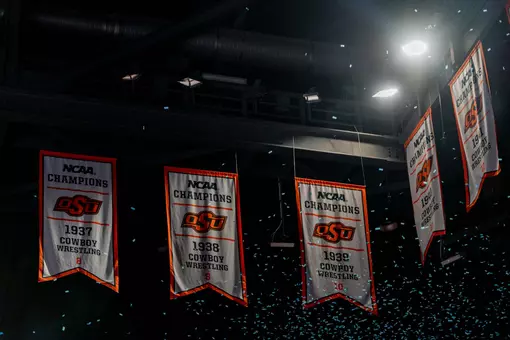
Oklahoma A&M would win the team national championship in both 1930 and 1931 - the program's third and fourth consecutive titles.
During those two title runs, the Cowboys would crown seven individual champions and have 13 wrestlers receive All-America honors.
National Wrestling Hall of Famers Jack Van Bebber and Conrad Caldwell won individual titles in both years. In 1930, Earl McCready, another hall of famer, would win his third consecutive title to become the first three-time collegiate national champion.
The other Cowboys to win national championships in the first two years of the decade were Bobby Pearce and Leroy McGuirk.
In 1981, Pearce would join Van Bebber, Caldwell and McCready as a Distinguished Member of the National Wrestling Hall of Fame.
Oklahoma A&M's winning streak would finally be snapped in 1932 when the Cowboys lost to Oklahoma, 12.5-13.5. The streak of 69 straight victories is still tied for the second-longest winning streak in program history.
The Cowboys' streak of four consecutive team national championships also came to a halt in 1932 as Indiana outscored Oklahoma A&M, 14-11.
1932 wasn't all bad for the Cowboys, as both Pearce (123 pounds) and Van Bebber (158.5 pounds) competed in the 1932 Olympics Games in Los Angeles. Both men would win their divisions and become the first Oklahoma A&M wrestlers to win Olympic gold medals.
Cowboy wrestlers would win two more Olympic medals in the 1936 Berlin games as Frank Lewis won the gold medal at 158.5 pounds and Ross Flood took home the silver medal in the 123-pound division.
Flood and Lewis were key contributors to the teams that began another national championship streak in 1933.
Flood, who wrestled at 126 pounds, won national championships in 1933, '34 and '35, each time leading the Cowboys to NCAA team honors. As a senior he was voted outstanding wrestler of the national tournament.
For his success in the sport, Flood was honored as a Distinguished Member of the National Wrestling Hall of Fame in 1978.
Lewis wrestled his way to a collegiate record of 45-5, winning the NCAA title in 1935 after placing second the year before. Both years he contributed vital points to the Cowboys' team trophies.
Lewis was honored as a Distinguished Member of the National Wrestling Hall of Fame in 1979.
In 1936, Oklahoma A&M would find itself without a team national championship for just the second time since the NCAA Championships were introduced. This time they would be outscored by Oklahoma, 14-10.
The following season, Oklahoma A&M would see its nearly five-year unbeaten streak snapped by Southwestern Oklahoma, 10.5-13.5. But the Cowboys next dual against Central Oklahoma would mark the beginning of a 76-dual winning streak, the longest in school history.
After the winning streak began, the Cowboys would reassert their dominance at the NCAA Championships as they claimed the team title in the final three years of the decade.
Those teams, which were led by Joe McDaniel and Stanley Henson, had 18 All-America honors and won 10 individual national championships.
Henson was defeated only once in three seasons and won three NCAA championships, leading the Cowboys to the team title each time. In 1937, he became the first sophomore to be voted outstanding wrestler of the national tournament.
Henson was honored as a Distinguished Member of the National Wrestling Hall of Fame in 1978.
McDaniel won three national championships, and was voted outstanding wrestler of the 1938 tournament, an honor won a year earlier by his roommate, Henson. He was honored as a Distinguished Member of the National Wrestling Hall of Fame in 1979.
At the conclusion of the 1930s, Cowboy wrestlers had won eight team national championships, 27 individual national championships, four Olympic medals, received All-America honors 52 times and finished with a team record of 72-2-3 in duals.
The 1930s marks one of the most successful decades in program history, but the 1940s would begin a new era in Cowboy wrestling history.
At the beginning of the decade, Oklahoma A&M found itself in the middle of a nine-year winning streak that dated to 1921.
Oklahoma A&M would win the team national championship in both 1930 and 1931 - the program's third and fourth consecutive titles.
During those two title runs, the Cowboys would crown seven individual champions and have 13 wrestlers receive All-America honors.
National Wrestling Hall of Famers Jack Van Bebber and Conrad Caldwell won individual titles in both years. In 1930, Earl McCready, another hall of famer, would win his third consecutive title to become the first three-time collegiate national champion.
The other Cowboys to win national championships in the first two years of the decade were Bobby Pearce and Leroy McGuirk.
In 1981, Pearce would join Van Bebber, Caldwell and McCready as a Distinguished Member of the National Wrestling Hall of Fame.
Oklahoma A&M's winning streak would finally be snapped in 1932 when the Cowboys lost to Oklahoma, 12.5-13.5. The streak of 69 straight victories is still tied for the second-longest winning streak in program history.
The Cowboys' streak of four consecutive team national championships also came to a halt in 1932 as Indiana outscored Oklahoma A&M, 14-11.
1932 wasn't all bad for the Cowboys, as both Pearce (123 pounds) and Van Bebber (158.5 pounds) competed in the 1932 Olympics Games in Los Angeles. Both men would win their divisions and become the first Oklahoma A&M wrestlers to win Olympic gold medals.
Cowboy wrestlers would win two more Olympic medals in the 1936 Berlin games as Frank Lewis won the gold medal at 158.5 pounds and Ross Flood took home the silver medal in the 123-pound division.
Flood and Lewis were key contributors to the teams that began another national championship streak in 1933.
Flood, who wrestled at 126 pounds, won national championships in 1933, '34 and '35, each time leading the Cowboys to NCAA team honors. As a senior he was voted outstanding wrestler of the national tournament.
For his success in the sport, Flood was honored as a Distinguished Member of the National Wrestling Hall of Fame in 1978.
Lewis wrestled his way to a collegiate record of 45-5, winning the NCAA title in 1935 after placing second the year before. Both years he contributed vital points to the Cowboys' team trophies.
Lewis was honored as a Distinguished Member of the National Wrestling Hall of Fame in 1979.
In 1936, Oklahoma A&M would find itself without a team national championship for just the second time since the NCAA Championships were introduced. This time they would be outscored by Oklahoma, 14-10.
The following season, Oklahoma A&M would see its nearly five-year unbeaten streak snapped by Southwestern Oklahoma, 10.5-13.5. But the Cowboys next dual against Central Oklahoma would mark the beginning of a 76-dual winning streak, the longest in school history.
After the winning streak began, the Cowboys would reassert their dominance at the NCAA Championships as they claimed the team title in the final three years of the decade.
Those teams, which were led by Joe McDaniel and Stanley Henson, had 18 All-America honors and won 10 individual national championships.
Henson was defeated only once in three seasons and won three NCAA championships, leading the Cowboys to the team title each time. In 1937, he became the first sophomore to be voted outstanding wrestler of the national tournament.
Henson was honored as a Distinguished Member of the National Wrestling Hall of Fame in 1978.
McDaniel won three national championships, and was voted outstanding wrestler of the 1938 tournament, an honor won a year earlier by his roommate, Henson. He was honored as a Distinguished Member of the National Wrestling Hall of Fame in 1979.
At the conclusion of the 1930s, Cowboy wrestlers had won eight team national championships, 27 individual national championships, four Olympic medals, received All-America honors 52 times and finished with a team record of 72-2-3 in duals.
The 1930s marks one of the most successful decades in program history, but the 1940s would begin a new era in Cowboy wrestling history.

Saturday, October 24
Thursday, October 22
Tuesday, October 20
Saturday, October 17