Oklahoma State University Athletics
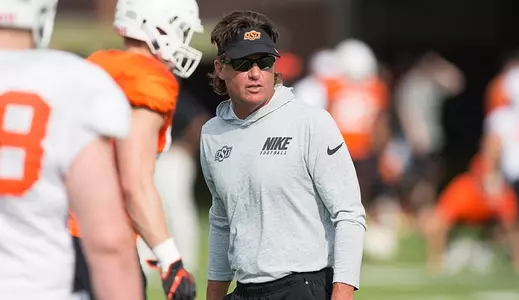
Gundy Previews Bedlam
November 05, 2018 | Cowboy Football
STILLWATER – Oklahoma State coach Mike Gundy met with members of the media Monday afternoon to discuss the Cowboys' upcoming matchup against Oklahoma this Saturday. A look at some of his comments on Bedlam:
On Kyler Murray:
"He's really good. We all know that. I could stand up here and talk about what he's done. The basis of defensive football is that everybody has a gap responsibility, everybody has a zone coverage or man coverage. The one player you can't, and or have a hard time accounting for, is the quarterback. The difference between what he presents and what they've had the last few years is that it is not a potential eight or 10-yard run. He might go 60 yards. He's been really good – a really good player. You can talk about it all day, but that's what he gives you. You're going to have to try and rally to defend everything, and then you're going to have to try and take care of him secondary. When you are trying to defend a player that is that active, it's not always easy. Which has been evident if you've watched their games this year."
On spying Kyler Murray:
"I'm not saying that it's not a good plan to do it, and I'm not saying people haven't tried it – I haven't seen it work very good for them. If you were to spy him, it would have to be someone who is very fast because he runs pretty well. There have been attempts and have been some times that it has been successful, but if you spy him, you're giving up something somewhere else. You have to really have a good plan and a good reason for it would be my guess. I meet with all of those guys in the afternoon and would know a lot more then, but I would just say that it would be a choice based on your concept and the opportunity at that particular time."
On committing penalties:
"We've had that issue for a majority of the year. We've had more facemasks, more late hits, more 15-yard penalties and more chop blocks than I've had in years I would guess. I may be off a little bit there. I didn't actually do the numbers to the specifics. What I did was I was really honest with them because that's usually what works better. I said 'With approximately eight minutes to go in a game you played on the road, you were ahead 10 points, you already had 100 yards in penalties and the coaches messed up and gave them a blocked punt for a touchdown – you were still ahead 10 points. Then you ended up with 130 something yards in penalties and you ended up losing the game. Two weeks ago, you beat a good Texas team and you left six points on the board and you played reasonably sound in those areas, but the point being is that you were still ahead by 10 points with eight minutes left after 100 yards of penalties and multiple drives being extended by things that we could've avoided and we're not a good enough team to do that and get away with it.' That's what I told them. We will continue to coach it. It has been talked about. It has been preached. I'm going to guess literally over 100 times that I've said it during the last three months. Smart, disciplined football - Pull off, no late hits, be in good position. Sometimes you're going to get a facemask like the one against Enoch (Smith) a while back, the guy was down, his hand moved and it caught it. Sometimes that's going to happen when you're playing aggressively. We had a late hit on the quarterback against Iowa State or (Texas) Tech where (Calvin) Bundage was fighting and he hit him low. He didn't mean to hit him low, but they flagged him based on the rule. I don't have a problem with that. Trey Carter went to a quarterback's face late for no reason and extended a drive where they're going to have to punt off their own 18-yard line. I have a problem with that. There's a point where coaches coach and have accountability, and where players play and have accountability. And then I'm in charge of all of it. Basically what you said keeps me from sleeping at night. If I lose a game and I get beat, I'm good. That's part of life. But if I give a game away, in my opinion, when I don't play the way I should or don't play smart football, I've got a problem with that. I'm not taking anything away from Matt (Rhule) and what Baylor has done. He's done a great job in just one year of resurging and they're fundamentally sound and all that. I'm just telling you the way I feel. That's what I told the team, and that's what I told the coaches. We've got to do a better job. The illustration, Saturday, tells us we're not doing a good enough job of coaching discipline and structure. Now there's different ways to do that. Some people spank their kids, some people put them in time out. Some people ground them and some people take their phone. There's different ways to handle that and so we will address those issues, but we certainly can't play good football, and have a chance to be successful when the clock expires, with all those different situations that happened on Saturday."
On how they can attempt to limit penalties moving forward:
"Well it's really simple – you take them out of the game and you don't put them back in. There's give and take. Whenever you get kids, and they get to a certain age – and I've gone through this – I'm going to punish them and take their car for two weeks. Well you're pretty miserable for two weeks because he is going to be begging you for a ride, but you have to do it if you want to enforce any discipline. It's not different with these guys. If your best guys are on the field and give you the best chance to win, and they're not playing smart football – see, I've been fortunate for 14 years because I haven't really been faced with this. We haven't really had to deal with it, but it is now. At some point, you have to say, 'If you're going to be selfish, because you're taking away from the other 10 guys, then you're going to have to come over and stand by us.' Then we're going to have to put a guy in that may be less experienced, or maybe not as athletic, so you really hurt the whole team. But I don't know what other options we're faced with at this particular time, because what I've been doing is not working. That's just the way it is. I've been wrong before."
On players' teammates' role in limiting penalties:
"The thing that I worry about as a head coach, and I don't worry about a lot, is that I talk too much to them. If you're always on somebody, like raising kids, at some point they quit listening to you. Or if you don't approach it the right way – if you don't teach, coach and parent, and you're yelling all the time – they give up. Kids these days aren't tough like we were when we were growing up. They're different. There comes a time where you have to have just real accountability. I feel good about our football team practicing. They practiced really well last night and their enthusiasm was really good. They practiced well last week. The things that have to happen are that we have to start making changes in those situations because you have two kinds of goals in an organization or a corporation. You've got short-term and long-term, and you have to make short-term decisions, but they have to benefit the long-term of the organization, which is this team, or they're not going to be beneficial. We have tried to make some short-term decisions – not we, me, because I usually make those decisions – and it has not worked out. I'm going to start looking into making long-term decisions, and hopefully the leaders on the team have to say, 'That's not going to happen anymore. Coach Gundy has told you that over 100 times this year. I'm telling you now that we're not doing that.' Somebody – Emmanuel Ogbah – made sure that didn't happen again, and it didn't have to be me. The peers are way more powerful than the coaches."
On implementing new policies to limit penalties:
"I'm just giving you options. I haven't made any decisions. But what I did was I explained to the staff that however many weeks ago at Kansas State, our illustration wasn't very good. Against Texas, they drew us a good picture. With Baylor, everything we did was pretty good. We need to be a little better against the rush and if you didn't extend so many drives defensively, you probably would've been a lot happier because the yards would've been considerably less and probably the points. But it didn't work that way. The illustration they gave us is that we're not a very disciplined football team. The coaches messed up on the punt, that wasn't the players. That was our fault. We have to be a more disciplined football team, and the decisions we make from here on out have to be so that, 'If I don't come in before curfew, I'm not losing my truck for two weeks – I'm losing my truck for two months. Do I want to lose my truck for two months?' That's their choice. That's what has to happen. I'm trying to give you the best illustration. I'll say this – I don't have all the answers. People ask me all the time, and if I did I would've already done it and put it into effect. Some of it is youth. Some of it is immaturity. Some of it is when they get frustrated. Some of it is maybe they're getting a little fatigued and they're a little of position, so they're reaching and grabbing and things like that. There is no easy answer, but we'll come up with one."
On if the team is tuning out on discipline:
"I don't see that at all with this team. I don't see lack of efforts. I don't see the frustration that creates animosity on a team. I don't see any of that and I've seen it before. I don't think they are tuning us out, we are just not getting results. So the penalties have to be a little bit more strenuous and maybe we can get some results."
On the development of young players:
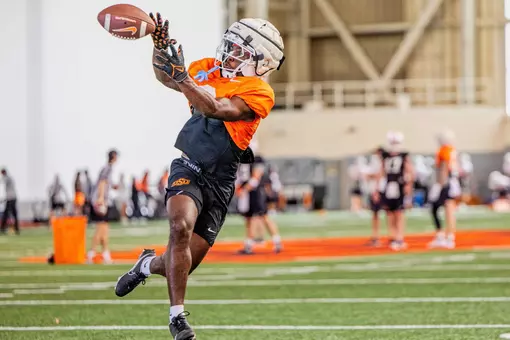
"They are doing well. Some guys are trying to find themselves. You don't just step up and lead. You've got to have some things that go into that. Darrion Daniels is good for us. He was leading our defense before he got hurt. Because he is experienced, he is a good player, he is vocal and he backs up what he says. It's hard to lead when you don't do what you say you are going to do, or you are telling them to do something you aren't going to do. I think he may want to get into coaching later. We need him now. He knows what's going on, he can talk to those guys and he can calm them down, that's why we have him there. Tylan Wallace is doing well too, but he is young. Last year he played not even one game. He has only played nine games in his life so it's hard for him to step up and be that guy. But he is going to, he will be this time next year."
On the Bedlam atmosphere:
"It's a special weekend for everybody. It always has been. Everybody wears orange or red this week. It's a big game. I think that works to our benefit. I know they will be riled up too. They will be excited to play in this game. They are going to prepare and work their butt off. It doesn't really change for me. I can't change. I can't be on an emotional rollercoaster. It's too hard. It's a long season. I try to stay even-keel the best I can. I try to coach the coaches and let the coaches coach the players. That's just my philosophy."
On the motivation for players this week:
"I don't know what motivates different young men. I think the most important thing is control what you can control. We all have things we do in life that we can control and other things are out of our hands. Their preparation, commitment, effort, film studies and the things that they do to get ready to play in this game. We can only control what we do here and that's the way we approach it each week."
On Kyler Murray:
"He's really good. We all know that. I could stand up here and talk about what he's done. The basis of defensive football is that everybody has a gap responsibility, everybody has a zone coverage or man coverage. The one player you can't, and or have a hard time accounting for, is the quarterback. The difference between what he presents and what they've had the last few years is that it is not a potential eight or 10-yard run. He might go 60 yards. He's been really good – a really good player. You can talk about it all day, but that's what he gives you. You're going to have to try and rally to defend everything, and then you're going to have to try and take care of him secondary. When you are trying to defend a player that is that active, it's not always easy. Which has been evident if you've watched their games this year."
On spying Kyler Murray:
"I'm not saying that it's not a good plan to do it, and I'm not saying people haven't tried it – I haven't seen it work very good for them. If you were to spy him, it would have to be someone who is very fast because he runs pretty well. There have been attempts and have been some times that it has been successful, but if you spy him, you're giving up something somewhere else. You have to really have a good plan and a good reason for it would be my guess. I meet with all of those guys in the afternoon and would know a lot more then, but I would just say that it would be a choice based on your concept and the opportunity at that particular time."
On committing penalties:
"We've had that issue for a majority of the year. We've had more facemasks, more late hits, more 15-yard penalties and more chop blocks than I've had in years I would guess. I may be off a little bit there. I didn't actually do the numbers to the specifics. What I did was I was really honest with them because that's usually what works better. I said 'With approximately eight minutes to go in a game you played on the road, you were ahead 10 points, you already had 100 yards in penalties and the coaches messed up and gave them a blocked punt for a touchdown – you were still ahead 10 points. Then you ended up with 130 something yards in penalties and you ended up losing the game. Two weeks ago, you beat a good Texas team and you left six points on the board and you played reasonably sound in those areas, but the point being is that you were still ahead by 10 points with eight minutes left after 100 yards of penalties and multiple drives being extended by things that we could've avoided and we're not a good enough team to do that and get away with it.' That's what I told them. We will continue to coach it. It has been talked about. It has been preached. I'm going to guess literally over 100 times that I've said it during the last three months. Smart, disciplined football - Pull off, no late hits, be in good position. Sometimes you're going to get a facemask like the one against Enoch (Smith) a while back, the guy was down, his hand moved and it caught it. Sometimes that's going to happen when you're playing aggressively. We had a late hit on the quarterback against Iowa State or (Texas) Tech where (Calvin) Bundage was fighting and he hit him low. He didn't mean to hit him low, but they flagged him based on the rule. I don't have a problem with that. Trey Carter went to a quarterback's face late for no reason and extended a drive where they're going to have to punt off their own 18-yard line. I have a problem with that. There's a point where coaches coach and have accountability, and where players play and have accountability. And then I'm in charge of all of it. Basically what you said keeps me from sleeping at night. If I lose a game and I get beat, I'm good. That's part of life. But if I give a game away, in my opinion, when I don't play the way I should or don't play smart football, I've got a problem with that. I'm not taking anything away from Matt (Rhule) and what Baylor has done. He's done a great job in just one year of resurging and they're fundamentally sound and all that. I'm just telling you the way I feel. That's what I told the team, and that's what I told the coaches. We've got to do a better job. The illustration, Saturday, tells us we're not doing a good enough job of coaching discipline and structure. Now there's different ways to do that. Some people spank their kids, some people put them in time out. Some people ground them and some people take their phone. There's different ways to handle that and so we will address those issues, but we certainly can't play good football, and have a chance to be successful when the clock expires, with all those different situations that happened on Saturday."
On how they can attempt to limit penalties moving forward:
"Well it's really simple – you take them out of the game and you don't put them back in. There's give and take. Whenever you get kids, and they get to a certain age – and I've gone through this – I'm going to punish them and take their car for two weeks. Well you're pretty miserable for two weeks because he is going to be begging you for a ride, but you have to do it if you want to enforce any discipline. It's not different with these guys. If your best guys are on the field and give you the best chance to win, and they're not playing smart football – see, I've been fortunate for 14 years because I haven't really been faced with this. We haven't really had to deal with it, but it is now. At some point, you have to say, 'If you're going to be selfish, because you're taking away from the other 10 guys, then you're going to have to come over and stand by us.' Then we're going to have to put a guy in that may be less experienced, or maybe not as athletic, so you really hurt the whole team. But I don't know what other options we're faced with at this particular time, because what I've been doing is not working. That's just the way it is. I've been wrong before."
On players' teammates' role in limiting penalties:
"The thing that I worry about as a head coach, and I don't worry about a lot, is that I talk too much to them. If you're always on somebody, like raising kids, at some point they quit listening to you. Or if you don't approach it the right way – if you don't teach, coach and parent, and you're yelling all the time – they give up. Kids these days aren't tough like we were when we were growing up. They're different. There comes a time where you have to have just real accountability. I feel good about our football team practicing. They practiced really well last night and their enthusiasm was really good. They practiced well last week. The things that have to happen are that we have to start making changes in those situations because you have two kinds of goals in an organization or a corporation. You've got short-term and long-term, and you have to make short-term decisions, but they have to benefit the long-term of the organization, which is this team, or they're not going to be beneficial. We have tried to make some short-term decisions – not we, me, because I usually make those decisions – and it has not worked out. I'm going to start looking into making long-term decisions, and hopefully the leaders on the team have to say, 'That's not going to happen anymore. Coach Gundy has told you that over 100 times this year. I'm telling you now that we're not doing that.' Somebody – Emmanuel Ogbah – made sure that didn't happen again, and it didn't have to be me. The peers are way more powerful than the coaches."
On implementing new policies to limit penalties:
"I'm just giving you options. I haven't made any decisions. But what I did was I explained to the staff that however many weeks ago at Kansas State, our illustration wasn't very good. Against Texas, they drew us a good picture. With Baylor, everything we did was pretty good. We need to be a little better against the rush and if you didn't extend so many drives defensively, you probably would've been a lot happier because the yards would've been considerably less and probably the points. But it didn't work that way. The illustration they gave us is that we're not a very disciplined football team. The coaches messed up on the punt, that wasn't the players. That was our fault. We have to be a more disciplined football team, and the decisions we make from here on out have to be so that, 'If I don't come in before curfew, I'm not losing my truck for two weeks – I'm losing my truck for two months. Do I want to lose my truck for two months?' That's their choice. That's what has to happen. I'm trying to give you the best illustration. I'll say this – I don't have all the answers. People ask me all the time, and if I did I would've already done it and put it into effect. Some of it is youth. Some of it is immaturity. Some of it is when they get frustrated. Some of it is maybe they're getting a little fatigued and they're a little of position, so they're reaching and grabbing and things like that. There is no easy answer, but we'll come up with one."
On if the team is tuning out on discipline:
"I don't see that at all with this team. I don't see lack of efforts. I don't see the frustration that creates animosity on a team. I don't see any of that and I've seen it before. I don't think they are tuning us out, we are just not getting results. So the penalties have to be a little bit more strenuous and maybe we can get some results."
On the development of young players:
"They are doing well. Some guys are trying to find themselves. You don't just step up and lead. You've got to have some things that go into that. Darrion Daniels is good for us. He was leading our defense before he got hurt. Because he is experienced, he is a good player, he is vocal and he backs up what he says. It's hard to lead when you don't do what you say you are going to do, or you are telling them to do something you aren't going to do. I think he may want to get into coaching later. We need him now. He knows what's going on, he can talk to those guys and he can calm them down, that's why we have him there. Tylan Wallace is doing well too, but he is young. Last year he played not even one game. He has only played nine games in his life so it's hard for him to step up and be that guy. But he is going to, he will be this time next year."
On the Bedlam atmosphere:
"It's a special weekend for everybody. It always has been. Everybody wears orange or red this week. It's a big game. I think that works to our benefit. I know they will be riled up too. They will be excited to play in this game. They are going to prepare and work their butt off. It doesn't really change for me. I can't change. I can't be on an emotional rollercoaster. It's too hard. It's a long season. I try to stay even-keel the best I can. I try to coach the coaches and let the coaches coach the players. That's just my philosophy."
On the motivation for players this week:
"I don't know what motivates different young men. I think the most important thing is control what you can control. We all have things we do in life that we can control and other things are out of our hands. Their preparation, commitment, effort, film studies and the things that they do to get ready to play in this game. We can only control what we do here and that's the way we approach it each week."
Players Mentioned

DT
/ Cowboy Football
DT
/ Cowboy Football
DE
/ Cowboy Football
WR
/ Cowboy FootballFriday, June 05
Friday, May 29
Wednesday, May 27
Monday, May 18