Oklahoma State University Athletics
Up Close: Defensive Improvement
June 01, 2010 | Cowboy Football
June 1, 2010
By Stefan Nolet
In 2007 and 2008, Oklahoma State had one of the most potent offenses in the country, ranking seventh nationally in 2007 and sixth in 2008. However, the defense could not match that kind of success. In those two seasons, the Cowboys finished 101st in total defense in 2007 and 93rd in 2008.
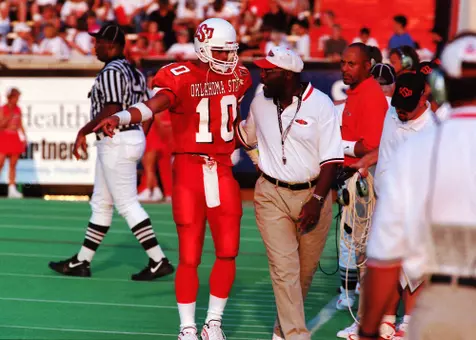
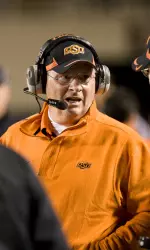
After the 2008 season, head coach Mike Gundy hired fellow Oklahoma State alum Bill Young away from Miami to shore up the Cowboy defense.
In past seasons, the Cowboys relied upon the offense to win games, but in 2009 with Young at defensive coordinator, OSU relied on a solid defensive unit down the stretch to pull out victories.
With the high-flying OSU offense handicapped by the loss of the nation's top receiver in Dez Bryant and a returning All-America running back in Kendall Hunter, it is not a reach to say that the play of the defense was among the biggest keys to the Cowboys posting a nine-win season and earning a berth to the Cotton Bowl despite facing substantial adversity.
The Cowboys showed improvement in most defensive categories from 2007 to 2008 under former defensive coordinator and current Toledo head coach Tim Beckman, but the pieces truly came together under Young's watch in 2009.
In 2007, the Cowboys allowed 443 yards of offense per game; in 2008 they allowed 405.5 yards per game. In 2009, the Cowboys jumped from No. 93 in total defense to No. 31 in the nation, allowing just 332.5 yards per game. In the Big 12, only Texas, Oklahoma and Nebraska had better total defenses.
The Cowboys showed a vast improvement in the rushing defense. In two seasons under Beckman, the Cowboys finished 56th and 52nd nationally in rush defense, allowing 155.8 and 137.9 yards per game in 2007 and 2008, respectively.
In 2009, the Cowboys were 11th nationally by suffocating opposing rushing attacks to the tune of a school-record 95.8 rushing yards allowed per game. Only Texas, Alabama, TCU, UCF, Wisconsin, Penn State, Ohio State, Oklahoma, Nebraska and North Carolina had better run defenses.
With superstar quarterbacks scattered throughout the Big 12 in recent years, stopping the pass hasn't been an easy chore for any defensive unit in the league.
In 2007, the Cowboys allowed 287.2 yards per game through the air. They surrendered 267.8 yards per game in 2008 but improved to 236.8 yards per game in 2009. More notably, Young's defensive unit ranked 22nd nationally in pass efficiency defense by limiting opposing quarterbacks to a 111.2 rating.
The Cowboys were able to improve their pass defense numbers in large part because they were more successful rushing the quarterback. In 2008, the Cowboys were ranked 107th in the country with only 15 sacks on the year.
The Cowboys upped their sack total to 28 in 2009, which tied them with Auburn, Arkansas and South Carolina for 46th in the country.
The increased pressure on the quarterback also helped the Cowboys force more turnovers. In two seasons under Beckman, the Cowboys had 12 interceptions in both seasons. Last season, the Cowboys finished with 18 picks, tying them with OU for 14th in the nation.
Improving in all other areas of defense helped the Cowboys improve in their scoring defense as well.
In 2007, OSU was ranked No. 79 in scoring defense, allowing 29.5 points per game. In 2008, the defense moved to No. 76 in the country by surrendering 28.1 points per game.
Under the direction of Young, the defense allowed almost one touchdown fewer per game, giving up only 21.7 points per game, good enough for No. 31 in the country.
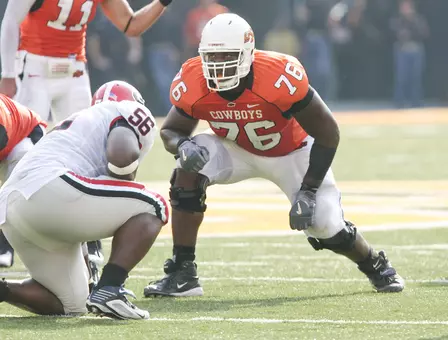
The Cowboys opened the season by holding the No. 13 Georgia to just 10 points, and when Texas Tech rolled into Stillwater last November, the Cowboys held the nation's No. 4 offense to 357 yards en route to a 24-17 victory.
Behind the leadership of veterans Orie Lemon, Ugo Chinasa, Shane Jarka, Markelle Martin and others, the Cowboys look poised to continue their defensive improvement in 2010.