Oklahoma State University Athletics
Making The Turn With Pablo Martin
June 25, 2007 | Cowboy Golf
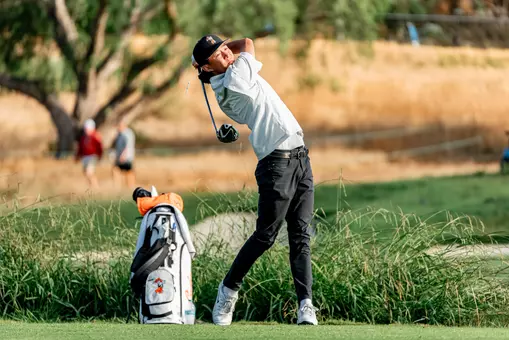
After the 2007 NCAA Championship, Cowboy golfer Pablo Martin decided to forgo his final year of eligibility to join the professional ranks. The Malaga, Spain native made his mark in college golf over the past three years and will leave as one of the most decorated players in the storied history of the OSU program. Martin was named the 2006 national player of the year, was a twice named a first-team All-American and was a first-team Academic All-American this past season. In addition, the two-time Big 12 Player of the Year made history this past spring when he became the first amateur to win a European PGA Tour event with his victory at the Estoril Open de Portugal. Following is a collection of Martin's thoughts on his transition to professional golf and his time at Oklahoma State.
What has the whirlwind been like since turning pro after the NCAA Championship?
“It has been crazy lately. Right after nationals, I went straight to Ohio to play a qualifier for the U.S. Open. I stayed there for a couple of days with a friend of mine and qualified for the Open. Right after that I went to Memphis (for the PGA Tour's Stanford St. Jude Championship). My parents came over and went to the U.S. Open. I will be here in Stillwater for a day and then go to Dallas, then (Grand Blanc) Michigan, then Detroit then Washington, then Scotland and I will be gone another few weeks. I have many things going on at the same time with club companies and those deals. It is a completely different world. I have never been through all of this before, but so far it has been great.”
Is there anything that you will miss about playing amateur golf?
“Yes. There are many, many things. One thing that I will miss the most is not being able to play with a team every week. Being by yourself is probably going to be the biggest thing. I think it is really nice when you get to practice and spend a lot of time with your friends and compete with them. I think that is the coolest thing about amateur golf.”
Now that you are making a living playing golf, what will be your first big purchase?
“I don't know. I had a nice dinner by myself last night while I was waiting for my flight. It was just kind of like a celebration by myself, but I don't know. I am going to keep saving my money and we will see after that. I might get a car or something.”
How would you grade yourself through your first two professional events?
“I think they were both pretty good experiences. My first tournament, I missed the cut by one. I feel like I left way too many shots out there on the golf course. Mainly because I felt the cut was going to be lower than it was. I thought I had to fire at some flags when I didn't need to. I wasted too many shots because of inexperience mainly because you think you have to play better than you have to do. At the same time, it was nice because I got to see everything that goes on in those tournaments. The week of the U.S. Open was just great from the beginning to the end. I got to play practice days with great players. I got to play with Scott Verplank and I got to play with Justin Leonard. I got to play with José Maria Olazábal and Sergio (Garcia) in the tournament, which was pretty neat because they put you with two of the best players in the field and right in front of Tiger Woods in prime time. It was unbelievable. There were so many people watching us. The really large crowds were really, really neat and I am really grateful to the USGA for putting me in that position. I think sometimes, coming out of college, it is difficult to get the chance to play in those situations where you can learn a lot.”
What was it like putting the tee in the ground for the first time as a professional and what was it like teeing it up at the U.S. Open with two of your heroes?
“Memphis really wasn't that bad. I don't really remember it that well. I wasn't shaking as bad as I was at the U.S. Open playing with those two guys. Memphis was a good experience, but you can't compare it to the U.S. Open. It was unbelievable. It was like what you dream of when you are little. Just to get to play with Sergio and Olazábal was an awesome thing. To get to play with them in your first U.S. Open, in your second tournament as a professional and in front of Tiger's crowd that is huge is just amazing. I was shaking on the first tee and that first hole was one of the longest I have ever had to play. After that, it was smooth and they were really nice guys. They kept calm. They said they were the same way as I was and we were all shaking the same way.”
Did those two players share any advice with you?
“The week before in Memphis I got to play with Sergio and I spent some time with Olazábal. He was joking around saying I turned pro just in time to get to play Memphis and turn around and play Oakmont, which are two of the hardest weeks out there on the PGA Tour. He said don't freak out because it isn't like this every week. Actually, once we started playing in the U.S. Open, they really grinded. They are all business and they don't joke around like they do outside the golf course. That was a good learning experience.”
Can you tell what the biggest difference between professional and amateur golf is yet?
“I think professionals are more prepared. They work harder than amateurs, I think. As an amateur, I used to go to the gym every now and then and you don't see that many amateurs there. Professionally, I went there every day and found someone different. It is there job and it isn't just something you do. Even when you are an amateur and you are in college, golf might be your first thing, but still you have other things to do like studying. Once you turn professional, this is the only thing you have to do, so you are going to put as much effort as you want to put into it. You can be as good as you want to be. It is just a matter of how much time you want to spend.”
Is there one area of your game that you feel you need to sharpen for professional golf?
“There are many things. I think it depends on what your goals are. I think you can make a nice living and live pretty well and still not be the best you can be. I think it all depends on your goals. With my game, I feel like there are many things I can work at and improve to be a lot better than what I am right now.”
What do you hope to have accomplished five or 10 years from now?
“I have some lofty goals. My biggest goal right now is to learn from the guys out there right now. I want to learn from the Tigers (Woods) and the Phils (Mickelson) and Retiefs (Goosen) and the Ernies (Els) because they are at a different level. If you keep your eyes open you can learn from anyone. My biggest concern right now is to learn as much as I can and get as much information as I can. I want to involve myself with good people and try to make a good plan and get a good work ethic and start working hard.”
What are your plans for the rest of the summer and the fall?
“I would like to play all the exemptions that I can get over here, which is seven. I have already played two. The U.S. Open didn't count and I hope to get into the British Open and that wouldn't count either. So I have five more tournaments.”
What was it like to make history with your European PGA win in Portugal?
“That was a neat week. It is funny because it happened in the middle of the season when things weren't going that well for me in college. For some reason, I wasn't getting good scores here. I was pushing too hard and the game doesn't show when you try that hard. Your mind isn't in the place it needs to be. You are thinking all different kinds of things that you shouldn't be thinking. Suddenly, I found myself playing okay, I make a couple of putts and then I end up winning the tournament and making history. That was a great example of no matter where your game is you can get things done. I think it was a great learning experience. Most of the time you get to learn from mistakes, but sometimes you get to learn from good things.”
How did that win change your life?
“It changed everything. It changed my life completely because at this very moment I would be trying to get invites in some tournaments. I would be struggling and trying to make money and trying to get status somewhere. Instead, I have a clear mind and I don't have to worry about anything other than playing golf and learning. Which is what you should be doing anyway, but it is a lot easier now. I am just playing and training and working on what I want to achieve that day.”
What will you take from your three years at Oklahoma State?
“There are way too many things to list them. What wouldn't I take from my time at OSU? I think it has been such an important experience in my life that I just don't see my life without OSU or without everything that I have learned over these three years.”
How have you changed in the past three years?
“I have matured a lot. Right now I am 21, but I feel like I am ready to travel and do everything by myself and play golf. I am a lot more mature from the business standpoint too. I know more people than I did when I got here. I speak better English. Everything is a lot easier and fell into place and that makes it easier to play professionally. I know what to do now. When I go out there, I know where I am and where I come from. I know what my goals are and what I need to achieve them. Before coming to college, I didn't really know what was going on. I had many ideas, but didn't really have anything in place.”
How has your time at OSU prepared you for life as a professional?
“I don't know where I would be if I didn't come here. I don't know where my game would be. The biggest thing is it has helped me believe I can do anything I want to do. The biggest thing I got from this program is you can be as good as your dreams. It is one thing to say that and another thing to believe that. One thing that is great about OSU is it really is it shows you that you can be as good as you want to be.”
How would you like to be remembered as a Cowboy?
“I would like to be seen as another tough guy that comes into the professional world and is ready to go and has a great work ethic. The same as Scott Verplank, Charles (Howell), Hunter (Mahan) and Bob Tway. They are all known as hard workers that don't complain and are tough. They can play in any conditions and no matter what they are, they are going to get the best out of what they have. They never make an excuse.”
Why did you think Karsten Creek was tougher than Oakmont and what is the toughest golf course you have ever played?
“I think Karsten Creek, absolutely. I think Coach Holder should be proud of what he did. He developed one of the toughest courses out there in the world. To play here in the winter when the wind is blowing and you are hitting 3-woods into all of the par 4s is pretty tough. At Oakmont we had perfect weather, but at Karsten Creek you play with the pressure of not being able to miss a shot. There are so many things. The course can be a killer. When you play with that pressure a few times you learn to play with those conditions. You have to be able to deal with that pressure. You go to Oakmont and everyone is complaining, but you have seen worse. You know that complaining is the last thing you want to do and you don't get anything out of griping about the course. You get what it is that day and you move on and try your best all of the time. It is a very humbling experience.”
What are you going to miss the most about being a college student?
“Hanging out with all of the students and hanging out with my teammates and all of the other guys from the other teams. I will miss being able to go to a game one day or going to a party. The college life I will miss, but life as a professional is good and it is time for another stage.”
What has the whirlwind been like since turning pro after the NCAA Championship?
“It has been crazy lately. Right after nationals, I went straight to Ohio to play a qualifier for the U.S. Open. I stayed there for a couple of days with a friend of mine and qualified for the Open. Right after that I went to Memphis (for the PGA Tour's Stanford St. Jude Championship). My parents came over and went to the U.S. Open. I will be here in Stillwater for a day and then go to Dallas, then (Grand Blanc) Michigan, then Detroit then Washington, then Scotland and I will be gone another few weeks. I have many things going on at the same time with club companies and those deals. It is a completely different world. I have never been through all of this before, but so far it has been great.”
Is there anything that you will miss about playing amateur golf?
“Yes. There are many, many things. One thing that I will miss the most is not being able to play with a team every week. Being by yourself is probably going to be the biggest thing. I think it is really nice when you get to practice and spend a lot of time with your friends and compete with them. I think that is the coolest thing about amateur golf.”
Now that you are making a living playing golf, what will be your first big purchase?
“I don't know. I had a nice dinner by myself last night while I was waiting for my flight. It was just kind of like a celebration by myself, but I don't know. I am going to keep saving my money and we will see after that. I might get a car or something.”
How would you grade yourself through your first two professional events?
“I think they were both pretty good experiences. My first tournament, I missed the cut by one. I feel like I left way too many shots out there on the golf course. Mainly because I felt the cut was going to be lower than it was. I thought I had to fire at some flags when I didn't need to. I wasted too many shots because of inexperience mainly because you think you have to play better than you have to do. At the same time, it was nice because I got to see everything that goes on in those tournaments. The week of the U.S. Open was just great from the beginning to the end. I got to play practice days with great players. I got to play with Scott Verplank and I got to play with Justin Leonard. I got to play with José Maria Olazábal and Sergio (Garcia) in the tournament, which was pretty neat because they put you with two of the best players in the field and right in front of Tiger Woods in prime time. It was unbelievable. There were so many people watching us. The really large crowds were really, really neat and I am really grateful to the USGA for putting me in that position. I think sometimes, coming out of college, it is difficult to get the chance to play in those situations where you can learn a lot.”
What was it like putting the tee in the ground for the first time as a professional and what was it like teeing it up at the U.S. Open with two of your heroes?
“Memphis really wasn't that bad. I don't really remember it that well. I wasn't shaking as bad as I was at the U.S. Open playing with those two guys. Memphis was a good experience, but you can't compare it to the U.S. Open. It was unbelievable. It was like what you dream of when you are little. Just to get to play with Sergio and Olazábal was an awesome thing. To get to play with them in your first U.S. Open, in your second tournament as a professional and in front of Tiger's crowd that is huge is just amazing. I was shaking on the first tee and that first hole was one of the longest I have ever had to play. After that, it was smooth and they were really nice guys. They kept calm. They said they were the same way as I was and we were all shaking the same way.”
Did those two players share any advice with you?
“The week before in Memphis I got to play with Sergio and I spent some time with Olazábal. He was joking around saying I turned pro just in time to get to play Memphis and turn around and play Oakmont, which are two of the hardest weeks out there on the PGA Tour. He said don't freak out because it isn't like this every week. Actually, once we started playing in the U.S. Open, they really grinded. They are all business and they don't joke around like they do outside the golf course. That was a good learning experience.”
Can you tell what the biggest difference between professional and amateur golf is yet?
“I think professionals are more prepared. They work harder than amateurs, I think. As an amateur, I used to go to the gym every now and then and you don't see that many amateurs there. Professionally, I went there every day and found someone different. It is there job and it isn't just something you do. Even when you are an amateur and you are in college, golf might be your first thing, but still you have other things to do like studying. Once you turn professional, this is the only thing you have to do, so you are going to put as much effort as you want to put into it. You can be as good as you want to be. It is just a matter of how much time you want to spend.”
Is there one area of your game that you feel you need to sharpen for professional golf?
“There are many things. I think it depends on what your goals are. I think you can make a nice living and live pretty well and still not be the best you can be. I think it all depends on your goals. With my game, I feel like there are many things I can work at and improve to be a lot better than what I am right now.”
What do you hope to have accomplished five or 10 years from now?
“I have some lofty goals. My biggest goal right now is to learn from the guys out there right now. I want to learn from the Tigers (Woods) and the Phils (Mickelson) and Retiefs (Goosen) and the Ernies (Els) because they are at a different level. If you keep your eyes open you can learn from anyone. My biggest concern right now is to learn as much as I can and get as much information as I can. I want to involve myself with good people and try to make a good plan and get a good work ethic and start working hard.”
What are your plans for the rest of the summer and the fall?
“I would like to play all the exemptions that I can get over here, which is seven. I have already played two. The U.S. Open didn't count and I hope to get into the British Open and that wouldn't count either. So I have five more tournaments.”
What was it like to make history with your European PGA win in Portugal?
“That was a neat week. It is funny because it happened in the middle of the season when things weren't going that well for me in college. For some reason, I wasn't getting good scores here. I was pushing too hard and the game doesn't show when you try that hard. Your mind isn't in the place it needs to be. You are thinking all different kinds of things that you shouldn't be thinking. Suddenly, I found myself playing okay, I make a couple of putts and then I end up winning the tournament and making history. That was a great example of no matter where your game is you can get things done. I think it was a great learning experience. Most of the time you get to learn from mistakes, but sometimes you get to learn from good things.”
How did that win change your life?
“It changed everything. It changed my life completely because at this very moment I would be trying to get invites in some tournaments. I would be struggling and trying to make money and trying to get status somewhere. Instead, I have a clear mind and I don't have to worry about anything other than playing golf and learning. Which is what you should be doing anyway, but it is a lot easier now. I am just playing and training and working on what I want to achieve that day.”
What will you take from your three years at Oklahoma State?
“There are way too many things to list them. What wouldn't I take from my time at OSU? I think it has been such an important experience in my life that I just don't see my life without OSU or without everything that I have learned over these three years.”
How have you changed in the past three years?
“I have matured a lot. Right now I am 21, but I feel like I am ready to travel and do everything by myself and play golf. I am a lot more mature from the business standpoint too. I know more people than I did when I got here. I speak better English. Everything is a lot easier and fell into place and that makes it easier to play professionally. I know what to do now. When I go out there, I know where I am and where I come from. I know what my goals are and what I need to achieve them. Before coming to college, I didn't really know what was going on. I had many ideas, but didn't really have anything in place.”
How has your time at OSU prepared you for life as a professional?
“I don't know where I would be if I didn't come here. I don't know where my game would be. The biggest thing is it has helped me believe I can do anything I want to do. The biggest thing I got from this program is you can be as good as your dreams. It is one thing to say that and another thing to believe that. One thing that is great about OSU is it really is it shows you that you can be as good as you want to be.”
How would you like to be remembered as a Cowboy?
“I would like to be seen as another tough guy that comes into the professional world and is ready to go and has a great work ethic. The same as Scott Verplank, Charles (Howell), Hunter (Mahan) and Bob Tway. They are all known as hard workers that don't complain and are tough. They can play in any conditions and no matter what they are, they are going to get the best out of what they have. They never make an excuse.”
Why did you think Karsten Creek was tougher than Oakmont and what is the toughest golf course you have ever played?
“I think Karsten Creek, absolutely. I think Coach Holder should be proud of what he did. He developed one of the toughest courses out there in the world. To play here in the winter when the wind is blowing and you are hitting 3-woods into all of the par 4s is pretty tough. At Oakmont we had perfect weather, but at Karsten Creek you play with the pressure of not being able to miss a shot. There are so many things. The course can be a killer. When you play with that pressure a few times you learn to play with those conditions. You have to be able to deal with that pressure. You go to Oakmont and everyone is complaining, but you have seen worse. You know that complaining is the last thing you want to do and you don't get anything out of griping about the course. You get what it is that day and you move on and try your best all of the time. It is a very humbling experience.”
What are you going to miss the most about being a college student?
“Hanging out with all of the students and hanging out with my teammates and all of the other guys from the other teams. I will miss being able to go to a game one day or going to a party. The college life I will miss, but life as a professional is good and it is time for another stage.”

Friday, June 05
Friday, May 29
Wednesday, May 27
Monday, May 18